Wednesday, August 12, 2015

Food Allergies in Children

On the rise at your local Arizona allergy and asthma clinics food allergies in children, to the tune of an increase around 50 percent between 1997 and 2011. That’s one in every 13 children, over 38 percent of which have a history of severe allergic reactions. Is your child effected by this potentially deadly issue?  

Food allergy suspects: Repeat offenders
The most common food allergens seen in an allergy and asthma clinic are allergies to milk, eggs, peanuts, tree nuts, soy, wheat, fish and shellfish. These eight foods account for 90 percent of all reactions. Even trace amounts can cause an allergic response. With over 30 percent of children with food allergies having sensitivities to multiple items, that’s a huge possibility of allergic reaction.

Keep kids safe - learn the signs of food allergies!
Within minutes to up to two hours after eating, food allergy reactions may be mild to severe, including…
  • Hives or itchy skin rashes.
  • Swelling of the lips and face.
  • Swollen, itchy, watery eyes.
  • Swelling of the mouth or throat.
  • Runny nose.
  • Repetitive cough.
  • Wheezing or difficulty breathing.
  • Stomach cramps, vomiting, or diarrhea.
Handling a severe food allergy reaction in your child
Every 3 minutes, someone is seen in an emergency room for a food allergy. To keep your child from becoming a statistic, it pays to be proactive.
  • Identify food allergies with the help of your local allergy and asthma clinic.
  • Consider medical identification jewelry.
  • Don’t take chances with problem foods. Reactions can worsen, and allergy medications are not foolproof.
  • When eating away from home, always read labels and ask questions to ensure food safety.
  • If you are at risk of severe food allergy reactions or anaphylaxis, keep doses of epinephrine (adrenaline) on you at all times for administration via auto-injector.
  • Make sure prescriptions are up-to-date.
  • Ensure your child, family members, and those who see your child on a regular basis (teachers, coaches, etc.) are aware of your child’s food allergy, as well as how and when to administer emergency medication.
  • If your child experiences a severe allergic response, don’t wait, treat symptoms immediately!
  • ALWAYS call 9-1-1 immediately following an anaphylactic reaction, even if medication appears to have resolved symptoms.
Food allergies don’t have to take over your life. Avoid anaphylaxis and effectively manage food allergies with the help of your local allergy and asthma clinic today!

“Facts and Statistics.” Retrieved July 21, 2015, from http://www.foodallergy.org/facts-and-stats.
“Allergy Statistics.” Retrieved July 21, 2015, from http://www.aaaai.org/about-the-aaaai/newsroom/allergy-statistics.aspx
“Food Allergy Training Guide for Hospital and Food Service Staff.” Retrieved July 21, 2015, from http://www.foodallergy.org/document.doc?id=149
“About Anaphylaxis.” Retrieved July 21, 2015, from http://www.foodallergy.org/anaphylaxis
“FAACT Food Allergy & Anaphylaxis Connection Team Brochure.” Retrieved July 21, 2015, from http://www.foodallergyawareness.org/media/faactbrochure/FAACT%20Brochure.pdf


Sunday, July 19, 2015

Should You Get Your Allergy Diagnosed By A Specialist?

Effective allergy treatment begins with an accurate diagnosis but unfortunately many Americans are choosing to skip this step, relying on guesswork and self-diagnosis to guide their own self-treatment. This is compounded by the many unreliable and inaccurate allergy testing kits available over the counter which can lead to a misdiagnosis. False-positives cause anxiety and unnecessary lifestyle changes while a false-negative can lead to someone not taking action when they need to, increasing their risk of a severe reaction in the future.
The only way to get a truly reliable result is to visit an allergist specialist at an asthma & allergy clinic. An expert can provide you with an accurate diagnosis and a full range of options for managing your condition effectively.
 
Tests are typically done using skin or blood tests, with skin testing being the preferred method for most situations as results typically appear within 20 minutes. As the tests are done using an allergen there may be some small discomfort if a reaction occurs and there is a very small possibility of a more severe reaction – but by visiting an expert you know you are safe with someone trained for every possibility.
If you are taking certain medicines, have a skin condition (such as eczema) or you are highly likely to have a severe reaction then your specialist may choose to use a blood test instead of a skin test. The allergy specialist will know which test is best for you or your child based on your circumstances and medical history.
Using their training and experience, a true asthma and allergy clinic will be able to make a diagnosis regardless of your skin type, substantially reducing the risk of misinterpretation, misdiagnosis or mismanagement of your condition.
Once you have an accurate diagnosis the specialist will be able to make recommendations on changes to your lifestyle and diet to enable you to effectively manage your condition, reduce the risk of a severe reaction and increase your quality of life.
 

Thursday, July 2, 2015

Options in Treating Allergy-Triggered Asthma


Allergens or Asthma- What is it?
Allergies and asthma are not the same thing but the two conditions are closely related. Allergens are the cause of an allergy attack. In some cases the allergens can take the attack one more step and asthma occurs. When this happens the condition is called allergic asthma.
There are many types of allergens; they can include dust, animal dander, mites, pollen, smoke, and mold, just to name a few. Exercise can exacerbate the condition. The condition can be so irritable that a working knowledge of allergy and asthma care can save you some grief. The following are a sampling of treatments your doctor might suggest.
Allergy-Triggered Asthma Treatment Options:
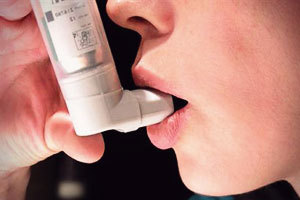
  • Short-Acting     Bronchodilators (Rescue Inhalers). These are     quick-acting, a real Johnny-on-the-spot solution. It’s always a good idea     to pack one and the effects can last 4 to 6 hours. They function by     dilating, or opening up, the airways leading to your lungs.
  • Long-acting     Bronchodilators. These are similar to the     short-acting models except that a dose is good for about 12 hours so 2     treatments per day are required. Your doctor will most likely also     prescribe inhaled steroids.
  • Inhaled     Corticosteroids. These are a step up in     strength from the above-mentioned inhalers. A key benefit is that they can     assist in keeping your lungs functioning better following future asthma     attacks.
  • Anti-Leukotriene     Medications. there are many pills that     inhibit leukotrienes, which are molecules that trigger inflammation in     your airways. Some pills are more popular than others, check with your     allergist specialist for which pill is best suited for your situation.
  • Antibody     Treatments. These are considered a a     last-resort medication for asthma that hasn’t responded well to other     treatments.
Avoiding Allergens in the First Place:
As much as it is possible, it benefits the sufferer to avoid allergens so as to minimize the amount of allergy and asthma care needed. In the seasons where the amount of pollen is high, try to stay indoors as much as possible. Refer to the daily allergen count on your local weather website.
Be sure that your HVAC return air filter has a filtration rating that your condition warrants. Don’t smoke or allow smoking in your home. Try to avoid contact with pets during an asthma attack. Dander is not your friend.
For more information on allergy-triggered asthma and the treatment options that are best suited for your situation, contact your local clinic. Our allergy and asthma clinics are located for our patient’s convenience and we are bilingual English/Spanish.

Saturday, June 13, 2015

Phoenix Families Advice - Does my child have a peanut allergy?


Peanuts are one of the most common allergy-causing foods, found in a diverse range of products including some baked goods, candy, chili and many others foods that by outside appearances seem peanut-free. Because peanuts are so common and can cause such severe reactions many parents in the Phoenix area worry about whether their child might have an allergy.

If you are a parent and seriously concerned your child may have a peanut allergy your first port of call should be professional allergists, rather than relying on an internet or self-diagnosis. A professional will take a detailed history and conduct a safe and accurate test to determine if your child has an allergic reaction when exposed to peanuts.

It is important to get a diagnosis for two reasons – firstly should you receive a diagnosis they will provide all the support and advice you need to help your child eat safely at home and outside the home. Just as importantly if your child is tested by professional allergists and they discover he or she does not have an allergy they can then safely eat peanuts. This is important because avoiding potential allergens can actually make children more sensitive – if a child is unnecessarily stopped from eating peanuts this may actually contribute to their developing an allergy!

If you are concerned then the following list of signs should help you decide whether you need to visit the allergists:
  • Near Immediate Reaction - If your child is allergic to peanuts they should experience a near-immediate reaction when exposed. This could be a combination of a number of symptoms including swelling of the face or throat, quick-spreading rashes, difficulty breathing, stomach pain, diarrhea, vomiting or feeling weak.
  • Often Runs in Families - Family members with allergies make it more likely your child will have allergies themselves.
  • Happens Every Time - An allergic reaction is reliable and repeatable – the symptoms should appear any time a peanut is eaten – they will not happen just some of the time.
If you are concerned contact an allergyspecialist in Phoenix and get your child checked at the earliest possible opportunity. Not only will you receive expert advice but you’ll also have the peace of mind of knowing for certain, regardless of the outcome.


Tuesday, December 24, 2013

Feed Him Early: A New Method for Arizona Allergy and Asthma Prevention

It has been stated by numerous authorities that presenting allergy-inducing food to babies at a certain stage in their lives will ensure that they will not develop the allergy. This is especially true if a family member has an existing condition. The daring announcement of the Canadian Society of Allergy and Clinical Immunology is going to be a step away from the norm. Parents who will try the method suggested by the givers of the joint statement should have a close correspondence with Arizona allergy and asthma experts. As yet, this method does not have solid scientific findings to back it up. That's why it is imperative that once the child has been introduced to one of the eight common allergy-inducing foods at such a stage, skin tests and other methods of diagnosis will have to be administered to determine the results and take appropriate action.

http://allergyarizona.net/industry-news/feed-him-early-a-new-method-for-arizona-allergy-and-asthma-prevention/

Sunday, December 22, 2013

Ask an Experienced Phoenix Allergist for Advice on Peanut Allergies

Twelve of the children were eventually able to eat the equivalent of 10 peanuts a day even after they went off the drug, according to the findings published in the December issue of the Journal of Allergy and Clinical Immunology. Although this new study has yielded mostly positive results, the scientists do admit that the research is still in its infancy stages and that a permanent cure for peanut allergies may still be far off. For now, the best way to avoid severe allergic reactions caused by peanuts is simply to avoid consuming them. If you would like to learn more about how to help your child avoid exposure to allergens, do not hesitate to consult a Phoenix immunologist or allergist for more information.

http://allergyarizona.net/industry-news/ask-an-experienced-phoenix-allergist-for-advice-on-peanut-allergies/

Friday, December 20, 2013

Common Allergens Reputable Allergy Doctors in Phoenix Fight Everyday

Food allergies are very common in children. In fact, allergy experts from the non-profit organization FARE (Food Allergy Research & Education) estimate that one child out of every thirteen in the United States suffers from some form of food allergy. The most common food allergens include milk, eggs, nuts, seafood, soy, and wheat. Most of the time, the only way to deal with allergies is to avoid allergens and to take proper medication. However, certain allergens, such as ragweed pollen, are virtually impossible to avoid. If you are tired of suffering from allergies every day, be sure to consult an experienced Phoenix allergist, such as Dr. Fadia Habib-Khazen, to see what other allergy treatment options are available to you.

http://allergyarizona.net/info-article/common-allergens-reputable-allergy-doctors-in-phoenix-fight-everyday/