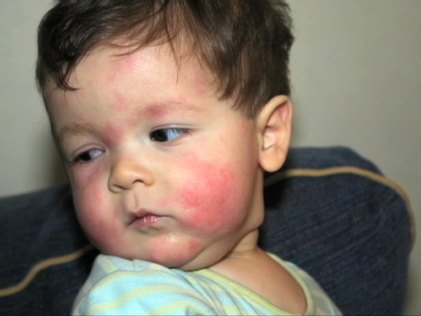
Wednesday, October 21, 2015

Are You Exposing Yourself to These 10 Common Skin Allergy Triggers?

Is your allergist in Scottsdale constantly helping you battle skin allergies? It may be because you are constantly exposing yourself to common allergy and asthma triggers.

No touching!

Contact dermatitis, skin allergies characterized by rashes or skin irritation resulting from allergens coming in contact with your skin, affect up to 3 percent of adults. Its triggers are often common – and sometimes surprising.

When it comes to skin allergies, are you your own worst enemy?
  1. Perfumes.
    Not just Chanel No. 5, we’re talking shampoo, soap, detergents, dryer sheets, air fresheners, and more. Only products labelled “fragrance-free,” not unscented, are immune.
     
  2. Nickel.
    Found in items from jewelry, watchbands, and glasses, to the zippers and buttons on your clothes, this common allergen can be worsened by sweat. To avoid sensitivity, items must be coated.
     
  3. Latex.
    Gloves, rubber bands, waistbands on pants, and more can contain latex, resulting in reactions from itchy eyes and rashes to difficulty breathing and vomiting.
     
  4. Dyes.
    To avoid contact dermatitis, a patch test is required prior to the application of hair dye or henna tattoos containing para-phenylenediamine (PPD).
     
  5. Clothing.
    Formaldehyde resins, used in clothing elastics and fabrics for waterproofing, shrinkage, and wrinkle resistance, can cause burning eyes, skin rashes, and chest tightness. Cotton, polyester, nylon, and acrylic are typically more lightly treated.
     
  6. Cosmetics.
    Preservatives such as formaldehyde, parabens, and thimerosal used in cosmetics can cause skin irritation at the site of contact.
     
  7. Creams and ointments.
    Neomycin, used in antibiotic and anaesthetic (pain relief) creams, ear drops, and eye drops, can irritate the skin. Not sure if that’s you? Try a patch test.
     
  8. Sunscreen.
    Common sunscreen ingredients can cause allergic reactions, including PABA (para-amino benzoic acid), oxybenzone, salicylates, benzophenones, and cyclohexanol. Reactions may be on contact for some, or for others only following sun exposure.
     
  9. Household products.
    Skin irritation is common after exposure to adhesives (superglue) and organic solvents (charcoal lighter fluid, paint thinner, furniture stripper, and nail polish remover).
     
  10. Poison ivy, oak, and sumac.
    Urushiol, a sticky substance found in poison ivy, poison oak, and poison sumac, can cause redness, itchiness, hives, and blisters – but only in susceptible individuals.
Give your allergist in Scottsdale a hand. Put these items on your list of usual suspects. Take them out of commission and reduce your skin allergy risk today!
Rosalyn Carson-DeWitt, MD. Top 10 Skin Allergy Triggers.  Retrieved from http://www.everydayhealth.com/allergy-photos/top-10-skin-allergy-triggers.aspx#01

Friday, October 16, 2015

6 Simple Tips for Reducing Fall Allergies

Your allergist in Avondale knows fall can be a miserable time for allergy sufferers. Why do fall allergies seem to wreak more havoc than in the spring? Cooler weather and changing foliage leading plants and weeds to release pollens, in addition to the additional punch of outdoor molds proliferating under fallen leaves.
Before ragweed and other fall allergens have you running to your allergist-immunologist, try implementing these simple, common sense tips for foiling fall allergies:

  1. Plan ahead.
    Before you plan outdoor activities, check pollen counts, scheduling events for when pollen is at its lowest.
     
  2. Take an antihistamine.
    Consult your allergist in Avondale to determine the best over the counter antihistamines to take before heading outdoors.
     
  3. Reduce exposure.
    If you can’t skip outdoor activities, consider donning a mask and leaving tasks until the middle of the day when pollen is at its lowest. Avoid outdoor activities in the early morning hours
     
  4. Stay clean.
    Your home – and your body. Wash off as soon as possible after spending time outside. When possible, change clothes before entering your home to prevent distributing allergens inside. Store shoes outside, and don’t hang clothes out to dry either.
     

Make sure air conditioning system is clean!
When allergy season is in full bloom, close your windows and let your heating and air system help you keep indoor air clear of allergens. Change your filter regularly, particularly during allergy season. To prevent the distribution of allergens throughout your home.  Also, investing in a HEPA air filter would be worthwhile! Don’t hide out in your home, manager allergies with ease this fall season. With these simple tips and the help of your immunologist, you too can get back to enjoying the great outdoors!

Sunday, October 4, 2015

Allergy-Free Outdoor Living Yard in the Desert during Fall?


Desert fall brings a drop in temperatures but also brings fall allergies.  The weather becomes beautiful but asthma and allergy sufferers sometimes get cooped up indoors - and not able to enjoy the AZ outdoors like they so desperately look forward to after surviving 4 months of 100 degree temperatures.

Be the change, opting for hypoallergenic landscaping options that can help return you a great outdoors. Sound too good to be true? It’s not. Even reducing the allergenic plants in a single garden can make a difference for asthma clinic patrons and sufferers, reducing pollen levels and the spread of allergenic plants far and wide.

Allergy-proof your yard with these suggestions from a Scottsdale allergy doctor & specialist:
  • Fruit trees
    With the exception of citrus flower fragrance, fruit trees are generally not allergenic or irritating.
  • Bamboo and palms
    Bamboo and female date and fan palms offer a beautiful, drought-tolerant option for your yard.
  • Succulents and Cacti
    The following do not produce wind-born pollen and are excellent low-water choices:
    • Saguaro
    • Peruvian Cereus
    • Golden Barrel
    • Hedgehog Cactus
    • Rainbow Cactus
    • Easter Lily
    • Sea Urchin Cactus
    • Prickly Pear
    • Cholla
    • Organ Pipe
  • Vines
    Hypo-allergenic climbers include bougainvillea, queen’s wreath, trumpet creeper, passion flower, cat’s claw, and roses such as Lady Banks and Tombstone.
  • Shrubs
    The University of Arizona’s offers an extensive
    list of shrubs which are both low-allergy and drought tolerant.
  • Accent plants
    For accent planting, your
    allergy and asthma clinic suggests various yucca species, agave, and aloe, as well as sotol, desert spoon, ocotillo, and Mexican evening primrose are your friends.
  • Brightly colored flowers
    Attracting bees, insects, and hummingbirds, these flowers are generally not allergenic:
    • Annual: California poppy, Mexican gold poppy; desert and arroyo lupine.
    • Perennial: assorted penstemons, chia, globe-mallow, and Peruvian and Goodding verbena.
  • Ground cover
    Morning glory, trailing indigo bush, lantana, African daisy, and rosemary, in addition to ice plant, treasure flower, germander, and gazania offer great low-lying options.
Pediatric allergists suggest avoiding these highly allergenic landscaping choices:
  • Olive trees
  • Mesquite trees
  • Juniper trees
  • Nut trees
  • Bermuda grass and most other grass species
  • Triangle Leaf Bursage (Rabbit Bush)
  • Desert Broom
  • Privet
Ready to head out and get started on an allergy-free outdoor retreat? You’re sure to get the job done with your local allergy and asthma clinic and the University of Arizona Agricultural extension service. Start sowing the seeds of change today!
University of Arizona Health Sciences Center. Gardens Compatible with Respiratory Allergy in Southern and Central Arizona. http://allergy.peds.arizona.edu/southwest/lowpollen.html.
Dr. Aaron Davis, M.D. Cedar Fever is Coming to Town. Retrieved from: http://www.allergyasthmaaz.com/blog/.


Thursday, September 10, 2015

Children's Food Allergies Are On the Rise - Is Your Child Protected?


On the rise at your local allergy and asthma clinic: food allergies in children, to the tune of an increase around 50 percent between 1997 and 2011. That’s one in every 13 children, over 38 percent of which have a history of severe allergic reactions. Is your child effected by this potentially deadly issue?  

Food allergy suspects: Repeat offenders
The most common food allergens seen in an
allergy and asthma clinic are allergies to milk, eggs, peanuts, tree nuts, soy, wheat, fish and shellfish. These eight foods account for 90 percent of all reactions. Even trace amounts can cause an allergic response. With over 30 percent of children with food allergies having sensitivities to multiple items, that’s a huge possibility of allergic reaction.

Keep kids safe - learn the signs of food allergies!
Within minutes to up to two hours after eating, food allergy reactions may be mild to severe, including…

  • Hives or itchy skin rashes.
  • Swelling of the lips and face.
  • Swollen, itchy, watery eyes.
  • Swelling of the mouth or throat.
  • Runny nose.
  • Repetitive cough.
  • Wheezing or difficulty breathing.
  • Stomach cramps, vomiting, or diarrhea.
Handling a severe food allergy reaction in your child
Every 3 minutes, someone is seen in an emergency room for a food allergy. To keep your child from becoming a statistic, it pays to be proactive.

  • Identify food allergies with the help of your local allergy and asthma clinic.
  • Consider medical identification jewelry.
  • Don’t take chances with problem foods. Reactions can worsen, and allergy medications are not foolproof.
  • When eating away from home, always read labels and ask questions to ensure food safety.
  • If you are at risk of severe food allergy reactions or anaphylaxis, keep doses of epinephrine (adrenaline) on you at all times for administration via auto-injector.
  • Make sure prescriptions are up-to-date.
  • Ensure your child, family members, and those who see your child on a regular basis (teachers, coaches, etc.) are aware of your child’s food allergy, as well as how and when to administer emergency medication.
  • If your child experiences a severe allergic response, don’t wait, treat symptoms immediately!
  • ALWAYS call 9-1-1 immediately following an anaphylactic reaction, even if medication appears to have resolved symptoms.
Food allergies don’t have to take over your life. Avoid anaphylaxis and effectively manage food allergies with the help of your local allergy and asthma clinic today!


“Facts and Statistics.” Retrieved July 21, 2015, from http://www.foodallergy.org/facts-and-stats.
“Allergy Statistics.” Retrieved July 21, 2015, from http://www.aaaai.org/about-the-aaaai/newsroom/allergy-statistics.aspx
“Food Allergy Training Guide for Hospital and Food Service Staff.” Retrieved July 21, 2015, from http://www.foodallergy.org/document.doc?id=149
“About Anaphylaxis.” Retrieved July 21, 2015, from http://www.foodallergy.org/anaphylaxis
“FAACT Food Allergy & Anaphylaxis Connection Team Brochure.” Retrieved July 21, 2015, from http://www.foodallergyawareness.org/media/faactbrochure/FAACT%20Brochure.pdf

Worsening Children's Allergies: Is Your Dishwasher to Blame?


Hate handwashing your dishes, relying on your dishwasher to make your daily chore list a little lighter? You could be contributing to your child’s allergy and asthma symptoms, according to a recent study *published in the journal Pediatrics conducted by pediatric allergy doctors.

A dirty discovery:
In the questionnaire-based study, pediatric allergy doctors focused on 1,029 children ages 7-8. The findings: Families who utilized hand dishwashing over automatic dishwashers experienced a reduced risk of allergic symptoms such as asthma, eczema, nasal congestion, runny nose, post-nasal drip, sneezing, red eyes, and itching of the nose and eyes. Children who at more fermented or farm-fresh foods were also noted as exhibiting lower rates of allergies, with the lowest risk associate with those children whose dishes were hand washed and food was procured directly from farms.


Too much of a good thing:
According to the hygiene hypothesis, children in developing countries grow up in an overly sanitized world, their lack of exposure to even common microorganisms leading to immune system misfires. The result? Over reaction - allergies and asthma rather than a normally developed, properly functioning immune system.

Don’t scramble to the scrap yard…
Though results were deemed “interesting,” physicians at the University of California-San Francisco explained more research into lifestyle choices is necessary. Until a causal relationship is identified, pediatric allergy doctors urge patients and their families not to ditch the dishwasher yet.


* Published at www.medicalnewstoday.com/articles/289832.php 'Fewer allergies among children in dishwasher-free homes"

Friday, August 28, 2015

Pediatric Allergy Advice about Baby Allergies

 
Is your precious bundle of joy fussy, sneezy, oozing with mucus, or covered in a miserable rash? These signs may not be a cold or flu, but baby allergies, a possible cause of long-term issues if not handled quickly and properly.
girl-568205__180
A common condition
Fifty million Americans suffer allergies, which emerge during infancy or childhood and rank number one among children’s chronic disease. Unlike colds and flus, which are seasonal, allergies may be present any time of the year. Symptoms may even be ongoing if the allergens which are effecting the baby are indoors.
Caused by an over reactive immune system, common signs of baby allergies include:
* Nasal congestion.
Mouth breathing can result in fitful sleep and daytime fatigue. More than a nuisance, if not addressed, mouth breathing can also lead to malformation of the facial bones and teeth.
* Ear infections.
Ear infections are painful, and fluid buildup can decrease hearing, hindering speech development.
* Skin problems. Many rashes are related to baby allergies, including…
  • Atopic dermatitis (eczema). A red, scaly, sometimes oozing rash common on baby’s cheeks, torso, arms, and legs. 
  • Contact dermatitis. Caused by a skin reaction to soap, detergent, clothing materials, poison ivy, or any other item that has come in contact with baby’s body, resulting in a sensitivity rash.
  • Hives. Intensely itchy, raised red welts.
*Stomach sensitivities
Not only from food allergies, nausea, vomiting, diarrhea and nausea may also result from sinus drainage and the swallowing of phlegm, which can irritate baby’s stomach. If other causes have been ruled out and baby is still fussy, baby allergies may be the culprit.
* Behavioral issues
Eating, sleeping, and mood disorders could be the result of baby allergies.
* Food allergies
Especially sensitive babies may have reactions to foods breastfeeding mothers eat. When introducing solids to baby, food introduction should be done gradually, one food at a time, separated by a week or more, in order to identify potential baby allergies.
Your sweetheart doesn’t have to suffer
A consultation withDr. Habib or Dr. Alasaly may help you determine if your baby has allergies and if allergy testing is necessary.
An ounce of prevention…
Minimize baby’s exposure to allergens until the offending sources can be determined and addressed.
  • Breastfeed your baby for first 4 months.
  • Introduce new foods wisely but try to expose your baby to most of the solid foods in the 2nd 6 months of life to help in the development of tolerance.
  • Don’t withhold commonly allergenic foods (milk, eggs, fish, nuts).
  • Clean regularly to keep dust, pollen, and mold under control.
  • Use dust-mite proof bedding covers.
  • Reduce pet dander with weekly bathing.
  • Keep pets out of baby’s room.
  • Put away feather pillows.
  •  Use hypoallergenic laundry detergent.
  • Avoid carpeting, especially in baby’s room.
  • Never allow smoking in your home.
Unsure if baby allergies are what’s troubling your tender little treasure? Adult & Pediatric Allergy Associates can help. Contact us to schedule a consultation today!

Wednesday, August 19, 2015

Are You Currently Battling with Skin Allergies?

Is your allergist in Scottsdale constantly helping you battle skin allergies? It may be because you are constantly exposing yourself to common skin allergens or irritants triggers.
No touching!
Contact dermatitis, skin allergies characterized by rashes or skin irritation resulting from allergens coming in contact with your skin, affect up to 3 percent of adults. Its triggers are often common – and sometimes surprising.
When it comes to skin allergies, are you your own worst enemy?
  1. Perfumes.
    Not just Chanel No. 5, we’re talking shampoo, soap, detergents, dryer sheets, air fresheners, and more. Only products labeled “fragrance-free,”     not unscented, are immune.
  2. Nickel.
    Found in items from jewelry, watchbands, and glasses, to the zippers and     buttons on your clothes, this common allergen can be worsened by sweat. To     avoid sensitivity, items must be coated.
  3. Latex.
    Gloves, rubber bands, waistbands on pants, and more can contain latex,     resulting in reactions from itchy eyes and rashes to difficulty breathing and vomiting.
  4. Dyes.
    To avoid contact dermatitis, a patch test is required prior to the     application of hair dye or henna tattoos containing para-phenylenediamine (PPD).
  5. Clothing.
    Formaldehyde resins, used in clothing elastics and fabrics for     waterproofing, shrinkage, and wrinkle resistance, can cause burning eyes, skin rashes, and chest tightness. Cotton, polyester, nylon, and acrylic are typically more lightly treated.
  6. Cosmetics.
    Preservatives such as formaldehyde, parabens, and thimerosal used in     cosmetics can cause skin irritation at the site of contact.
  7. Creams and ointments.
    Neomycin, used in antibiotic and anesthetic (pain relief) creams, ear  drops, and eye drops, can irritate the skin. Not sure if that’s you? Try a patch test.
  8. Sunscreen.Common sunscreen ingredients can cause allergic reactions, including PABA (para-aminobenzoic acid), oxybenzone, salicylates, benzophenones, and cyclohexanol. Reactions may be on contact for some, or     for others only following sun exposure.
  9. Household products.
    Skin irritation is common after exposure to adhesives (superglue) and     organic solvents (charcoal lighter fluid, paint thinner, furniture stripper, and nail polish remover).
  10. Poison ivy, oak, and sumac.
    Urushiol, a sticky substance found in poison ivy,     poison oak, and poison sumac, can cause redness, itchiness, hives, and     blisters – but only in susceptible individuals.
Give your allergist in Scottsdale a hand. Put these items on your list of usual suspects. Take them out of commission and reduce your skin allergy risk today!
Rosalyn Carson-DeWitt, MD. Top 10 Skin Allergy Triggers.  Retrieved fromhttp://www.everydayhealth.com/allergy-photos/top-10-skin-allergy-triggers.aspx#01